Floor cleaning with household vinegar is one of the oldest, most effective, and eco-friendly methods for maintaining sparkling clean floors without harsh chemicals. Whether you’re trying to sanitize high-traffic areas or remove sticky residue, vinegar can be your go-to cleaner, if you use it the right way.
But there are a lot of questions people ask:
“Can I mop with vinegar on wood?”
“Is vinegar safe for floors like laminate and tile?”
“What’s the right vinegar-to-water ratio?”
In this guide, we’ll walk you through 7 proven ways to use household vinegar to clean floors safely, effectively, and confidently. From hardwood to tile, and even sealed concrete, you’ll learn exactly how to get results while protecting your floor’s finish.
Let’s dive in!
Tip #1: Know Which Floors Are Safe for Vinegar

Before diving into floor cleaning with household vinegar, it’s important to understand where vinegar works, and where it doesn’t.
Safe Flooring Types:
- Tile
- Vinyl
- Laminate
- Sealed hardwood
- Sealed concrete
Vinegar is acidic, which makes it great at breaking down grease, grime, and mineral deposits. However, if you’re wondering “is vinegar safe for floors like hardwood or stone?”, the answer depends on the finish.
Not Recommended For:
- Unsealed hardwood
- Natural stone floors like marble, granite, or travertine
- Waxed floors
Using vinegar on these surfaces can lead to etching, discoloration, or stripping of protective coatings.
Pro Tip: If unsure, test in a small, hidden area first. Even on sealed wood or laminate, it’s smart to avoid over-wetting.
Tip #2: Master the Vinegar-to-Water Ratio for Mopping
One of the most common mistakes people make when attempting floor cleaning with household vinegar is using the wrong dilution. Too strong, and you risk damage or a lingering smell. Too weak, and it may not clean effectively.
The Perfect Vinegar Floor Cleaner Mix:
- 1 cup white distilled vinegar
- 1 gallon warm water
This ratio is safe for most moppable surfaces, including vinyl, tile, and sealed laminate. It effectively:
- Cuts through sticky buildup
- Neutralizes odors
- Leaves floors streak-free
If you’re asking, “Can I mop with vinegar every week?” Yes, but keep it light and always follow up with a dry mop to remove moisture.
Pro Tip: For added scent and antimicrobial boost, add a few drops of essential oil (like lemon or tea tree) to your vinegar solution.
Tip #3: Use the Right Mop for Best Results
Even the best vinegar solution won’t do much if you’re using the wrong mop. A big part of successful floor cleaning with household vinegar is pairing your cleaner with a mop that works with your floor type.
Best Mop Types for Vinegar Cleaning:
- Microfiber flat mop: Excellent for hardwood, laminate, and tile; it distributes vinegar evenly and absorbs well.
- Spin mop or string mop: Great for larger areas like kitchens or open floor plans.
- Spray mop: Ideal for controlled vinegar use, especially on laminate and sealed wood floors.
Avoid sponge mops on textured tile—they tend to push dirt into grout lines. Always make sure your mop is clean before use; otherwise, you’ll spread old grime around.
Pro Tip: Wash or rinse your mop head after each use to avoid vinegar buildup and funky smells.
Tip #4: Target High-Traffic Areas First
When using household vinegar to clean floors, focus first on high-traffic zones like entryways, kitchens, and hallways. These areas collect the most dirt, oil, and foot traffic residue, making vinegar’s degreasing power even more valuable.
How to Clean Strategically:
- Start mopping from the dirtiest areas and work your way out.
- Let the vinegar solution sit for 1–2 minutes on extra sticky spots before wiping.
- Use overlapping strokes for even coverage.
If you’re wondering how to use vinegar for cleaning floors that are heavily trafficked, this targeted approach gets results without having to re-mop the entire house.
Expert Insight: For tile or linoleum floors in busy areas, doing a light vinegar mop twice a week can prevent buildup and odors long-term.
Tip #5: Deodorize and Disinfect Naturally
One of the best reasons to use household vinegar for floor cleaning is its natural deodorizing and disinfecting properties. Vinegar neutralizes odors and helps reduce bacteria, especially helpful in kitchens, bathrooms, and pet areas.
How to Deodorize Floors:
- Add 5–10 drops of essential oil (like lemon, lavender, or eucalyptus) to your vinegar-water mix
- Let the solution air dry naturally, don’t rinse
- Mop entryways and mudrooms weekly to cut down on lingering smells
If you’ve ever wondered, “Can I mop with vinegar to kill germs?”, the answer is yes, especially on sealed hard surfaces where germs linger.
Tip #6: Buff for Natural Shine
After mopping, you can boost the finish of your floor without waxes or polishers. Here’s how to get that post-clean glow:
- Let the vinegar solution dry
- Then, go over the floor with a dry microfiber mop or cloth to buff the surface
- This removes streaks and brings out a subtle, natural shine
This works especially well on vinyl and laminate. It’s a bonus to using vinegar to clean floors, they’ll look as good as they feel.
Tip #7: Avoid Common Mistakes with Vinegar Floor Cleaning
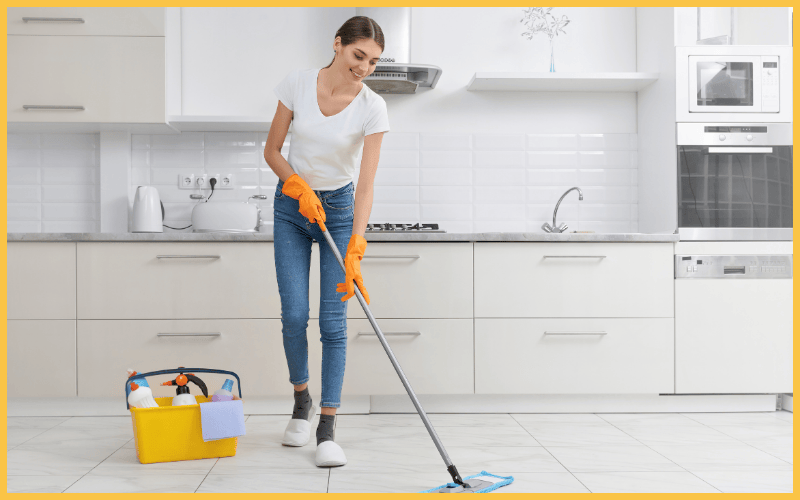
Even though floor cleaning with household vinegar is simple, some common mistakes can damage your floors or reduce effectiveness.
What to Avoid:
- Using vinegar on natural stone (it etches the surface)
- Over-saturating wood or laminate with liquid
- Skipping the rinse or buff step if streaks appear
- Mixing vinegar with bleach (this produces harmful fumes)
Pro Tip: Stick to a once-a-week vinegar mop for maintenance. Overuse may dull some floor finishes over time.
Vinegar – The Natural Floor Cleaning Hero
Now that you’ve mastered floor cleaning with household vinegar, you can enjoy a streak-free, sanitized, and eco-friendly home without reaching for harsh chemicals.
Here’s a quick recap:
- Use vinegar only on safe floor types
- Mix it correctly (1 cup vinegar per gallon of water)
- Mop high-traffic areas regularly
- Deodorize and shine with natural boosters
- Avoid over-wetting and stone surfaces
Still need help? At Hellamaid, we know exactly how to handle every floor type, naturally and professionally.
Book a professional cleaning today, and we’ll bring that natural sparkle right to your doorstep!