How to clean a popcorn ceiling may not be the first thing on your chore list, but it’s a task worth doing, especially if you’re dealing with dust buildup, cobwebs, or stubborn stains. Popcorn ceilings, popular for their noise-reducing properties and retro vibe, are notoriously tricky to clean. The wrong method can easily damage the textured surface or send particles flying into the air.
Whether you’re a homeowner prepping for a deep clean or a renter wanting to leave your place spotless, this guide walks you through the safest and most effective ways to tackle the job. From dry dusting to stain removal, we’ve gathered expert-backed steps to make it easier.
Let’s get started!
1. Inspect and Test Before You Clean
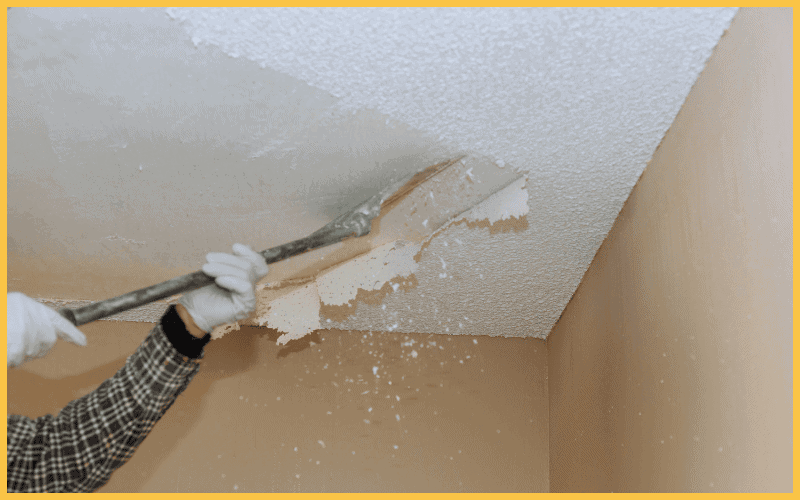
Before grabbing a vacuum or sponge, it’s crucial to inspect your ceiling for damage and test for materials like asbestos, especially in older homes. Popcorn ceilings installed before the 1980s could contain asbestos, which poses serious health risks if disturbed.
Here’s what to do before cleaning:
- Visually inspect the ceiling for cracks, flaking, or discoloration.
- Look for water stains that might indicate a leak or previous damage.
- Do an asbestos test if your home was built before 1985. You can buy a home testing kit or hire a pro.
- Do a dry-cleaning test patch in a small, hidden corner to check how well the surface holds up to gentle cleaning methods.
Why this matters:
The delicate, bumpy texture of popcorn ceilings can disintegrate if scrubbed too hard or exposed to moisture. Starting with a careful assessment helps you choose the safest, most effective method.
2. Dry Dust First – Don’t Skip This Step
When learning how to clean a popcorn ceiling, dry dusting is your safest and smartest first move. This removes loose debris without risking water damage or flattening the texture.
Tools you’ll need:
- Microfiber duster with an extendable handle
- Vacuum cleaner with a soft brush attachment
- Painter’s pole + soft-bristle brush (for high ceilings)
How to do it:
- Start in a corner and gently work your way across the ceiling.
- Use long, slow strokes to avoid scattering dust.
- Never press hard, the texture is fragile and can crumble.
- If using a vacuum, hold the brush attachment just below the ceiling to reduce suction force.
- For fans, vents, or cobwebs, go around in a circular motion with your brush.
Pro Tip:
Wrap a microfiber cloth around a broom and secure it with rubber bands as a DIY dusting tool for tricky corners.
Why this matters:
Dry dusting not only prevents dust from turning into sticky grime later (when moisture is added), it also preps the surface for any spot-cleaning you may need to do.
3. Spot Clean with a Gentle Touch
Once you’ve dusted thoroughly, the next step in how to clean a popcorn ceiling is spot cleaning. This is perfect for tackling stains, cobweb buildup, or small smudges, without soaking the ceiling.
What You’ll Need:
- Spray bottle with water and a drop of mild dish soap
- White sponge or soft cloth (avoid colored sponges that may bleed)
- Towel or plastic sheet to protect furniture below
Step-by-Step Instructions:
- Lightly mist the sponge, not the ceiling. Never spray directly onto the surface.
- Gently dab (don’t rub) the stained area. Use a blotting motion to lift dirt without scraping.
- Let the area air dry completely before continuing with additional cleaning.
- For tougher stains (like smoke or mildew), use a vinegar-water mix (1:3 ratio) with the same blotting method.
Important Tips:
- Avoid using too much pressure, popcorn ceilings are delicate and may crumble with force.
- Never oversaturate the area. Water damage can soften or dissolve the texture.
- If the stain remains after drying, repeat the blotting process once more.
Why It Works:
Popcorn ceilings aren’t sealed like flat surfaces. Blotting rather than scrubbing ensures the stain lifts without damaging the material or causing sagging.
4. Tackle Ceiling Stains with DIY Cleaners That Work
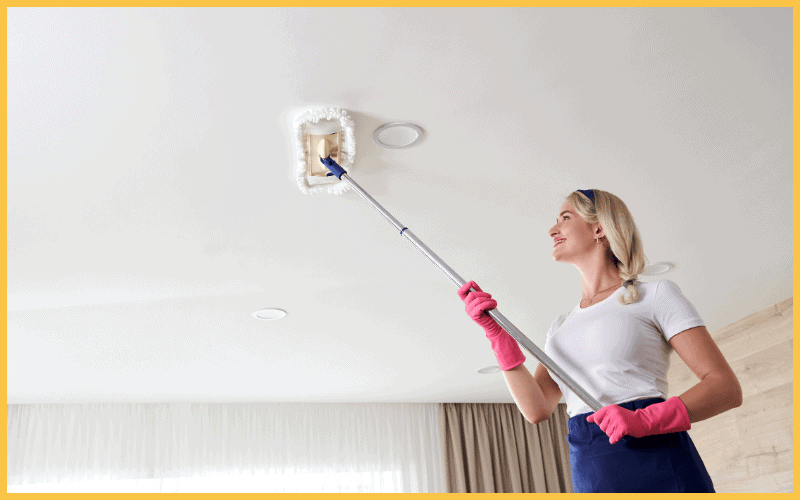
If you’re dealing with more stubborn discoloration, knowing how to clean a popcorn ceiling using the right DIY cleaner can make all the difference. Water stains, smoke damage, and mildew are common issues in older homes, and they don’t always come off with a simple sponge.
Homemade Stain-Removing Solutions:
- Vinegar & Water Mix (1:3 ratio)
Great for mildew or yellowing caused by moisture. - Hydrogen Peroxide Solution (3%)
Perfect for tough stains like smoke damage (test in an inconspicuous area first). - Baking Soda Paste (Baking soda + a small amount of water)
Gently dabbed on greasy or persistent spots.
How to Apply:
- Lightly dip a white sponge or microfiber cloth into the solution.
- Gently blot the stained area.
- Let it air dry completely.
- Repeat if necessary, but avoid over-wetting.
Pro Tip: Always do a spot test in a corner of the ceiling. Textured popcorn can react differently depending on age and material.
Why DIY Cleaners Work:
They’re chemical-free, budget-friendly, and safer for delicate surfaces. Plus, you’re less likely to cause further damage while lifting deep-set stains.
5. Remove Cobwebs and Pet Hair (Without Breaking a Sweat)
Cobwebs in the corners and lingering pet hair are surprisingly common on textured ceilings. Knowing how to clean a popcorn ceiling without crumbling it can save your ceiling, and your sanity.
Easy Ways to Remove Cobwebs and Hair:
- Use a Microfiber Duster on an Extendable Pole
This allows you to gently sweep the ceiling without pressure. - Wrap a Clean Sock Around a Broom
Secure it with a rubber band. This grabs pet hair and lint better than most store-bought tools. - Use a Vacuum Cleaner with a Soft Brush Attachment
Set it to low suction to avoid damage, and hover, not press, over the surface.
What to Avoid:
- Pressing too hard (you’ll crush or flake the texture).
- Using sticky lint rollers or tape (this can pull down chunks of the ceiling).
Why It Matters:
Pet hair and cobwebs collect dust and allergens. Keeping your ceiling free of these helps improve indoor air quality and keeps your home feeling fresher, especially if someone in your home suffers from allergies.
6. Repainting After Cleaning a Popcorn Ceiling
After you’ve learned how to clean a popcorn ceiling, you might notice discolored patches, stains, or simply want to refresh the look. Repainting can restore its brightness, but it has to be done carefully.
Steps to Repaint a Popcorn Ceiling:
- Choose the Right Paint:
Use flat or matte ceiling paint. Avoid glossy finishes, they highlight imperfections in textured ceilings. - Use a Roller with Thick Nap (¾” or more):
This helps the roller glide over the popcorn texture and reach all the nooks and crannies. - Apply Paint Gently:
Pressing too hard can cause the texture to crumble or fall off. Light, even strokes work best. - Avoid Spray Painting Indoors:
It can be messy and hard to control unless professionally done. Rolling is the safer DIY option. - Prime First if Needed:
If your ceiling has water stains or smoke damage, apply a stain-blocking primer before the paint. This ensures an even finish and prevents discoloration from bleeding through.
Pro Tip:
If your ceiling hasn’t been painted in years, or the texture is coming loose, consider hiring a professional painter experienced in popcorn ceiling work.
FAQ’s
Can I vacuum a popcorn ceiling to remove dust?
Yes, you can! Use a vacuum cleaner with a soft-bristle brush attachment. Be gentle and test a small corner first to ensure the texture doesn’t crumble.
What’s the best way to remove stains from a popcorn ceiling?
Mix warm water with a little dish soap or hydrogen peroxide for tougher stains. Lightly dab the stain using a sponge, avoid scrubbing to prevent damage.
How do I know if my popcorn ceiling contains asbestos?
If your home was built before 1985, don’t attempt to clean or disturb the ceiling until you’ve had it tested by professionals. Asbestos exposure is a serious health risk.
Can I use a steam cleaner on a popcorn ceiling?
No. Steam can cause the texture to loosen or fall off. Stick to dry cleaning methods or very light misting in heavily stained areas.
Should I repaint my popcorn ceiling after cleaning it?
If it looks dull, yellowed, or patchy after cleaning, repainting is a good idea. Use a thick-nap roller and flat ceiling paint, and be very gentle.
Ready to Skip the Mess and Let Pros Handle It?
Cleaning a popcorn ceiling can be tedious and risky if done wrong. Why not let trusted professionals do the heavy lifting? At Hellamaid, we offer top-rated cleaning services beyond the basics, so you never have to worry about dust, stains, or ceiling debris again.
Book your cleaning today and enjoy a spotless home from top to bottom.